



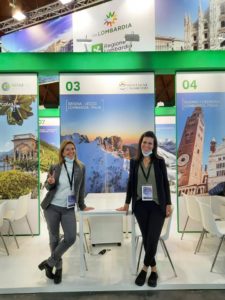
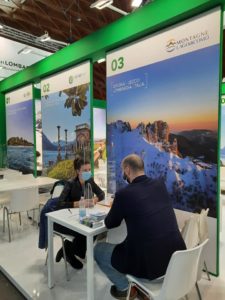
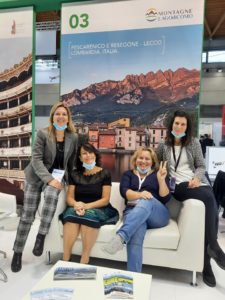
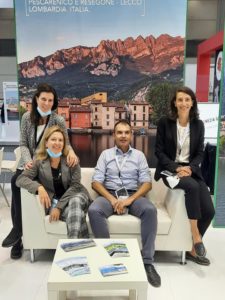
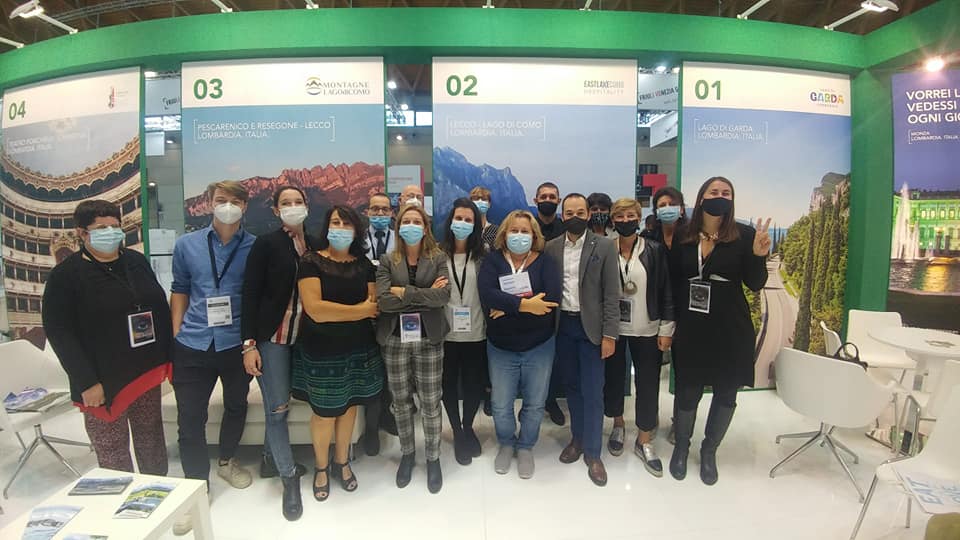
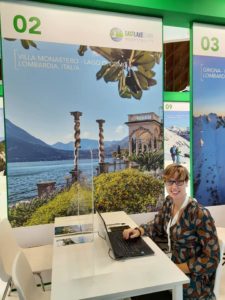
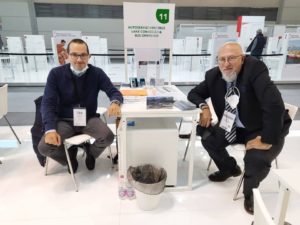
Siamo lieti di comunicare che la nostra rete di imprese Montagne del Lago di Como parteciperà al TTG di Rimini, la fiera BtoB del settore turistico in programma dal 14 al 16 ottobre 2020. Saremo ospitati nell’area Seller di Regione Lombardia – Explora, insieme ad altri operatori del Lago di Como, nello spazio riservato ai consorzi turistici (10 in totale per la Lombardia), insieme a Valtellina, Lago di Garda, Valchiavenna, Tonale e altri… un grande onore e una grande responsabilità!
La fiera prevede una ricca agenda di appuntamenti con Buyer e Tour Operator internazionali, durante i quali lo staff di MLC presenterà il catalogo di proposte degli operatori associati alla rete e de Le Vie del Viandante, il nuovo cammino internazionale che collega Milano al San Bernardino.
Qui sotto alcune immagini dal TTG 2020. Per vedere l’album completo su Facebook clicca qui.
Villa Camilla is a historic residence on north Lake Como, today the seat of Domaso Town Hall.
Built in the early 1600s as the home of Ghezzi family, it was then sold to Count Filippo Antonio Calderara who enlarged the building and the park. In 1753 the property passed to his nephew Bartolomeo, who married the Neapolitan dancer Vittoria Peluso: the two resided in Villa d’Este in Cernobbio and used the more modest Villa in Domaso as a “country house”. After Calderara’s death, Villa Camilla passed to various owners, including the Lampugnani family and the English spouses Samuel Hill and Emma, both buried in the Domaso cemetery. Later in 1903 the villa was purchased by Count Giuseppe Sebregondi, who embellished it with paintings and stuccos and enlarged the park. His sons sold the villa in 1955 to the Municipality of Domaso, which used it as a Town Hall.
The name Villa Camilla was chosen by Count Giuseppe Sebregondi, in honor of his first wife, Countess Camilla Barbiano di Belgioioso.
The villa, as well as being the seat of the Municipality of Domaso, is now used to host cultural events, concerts and events.
The original body has a neoclassical layout characterized in the south facade by a rich granite portal, integrated by an overlying terrace in worked stone and by the symmetry of the openings. Like other buildings of the time on Lake Como, the villa has an alignment of the central openings between the lake front and the opposite one, so that a view of the lake was possible from the garden too. If the structure of the villa has remained substantially unchanged up to the present day, this is not the same for the pictorial decorations and for the plasters that have been redone several times.
Villa Camilla is located in a park of about 8000 meters. characterized by artificial nineteenth-century tuff caves and a prestigious gate dating back to 1700. In the garden there are many varieties of camellias, cedars and conifers.
We suggest you a pleasant walk, from Gravedona to Domaso, along urban streets and mule tracks, with a magnificent view of Lake Como Mountains, along the itinerary: Gravedona – Segna – Pozzolo – Domaso – Gravedona. To come back you can take the peaceful lakeside promenade from Domaso to Gravedona.
Our walk starst from the Gravedona ed Uniti pier and continues along the lakefront to Piazza Mazzini, where you can follow the signs for Castello. The itinerary takes us to a hill with a beautiful view of the lake and the town. Turn to the left along via Volta, and then left to via San Rocco: we are now on the Regina State road, in front of the Town Hall. From here continue to the right and immediately take via Dosi and Segna on the left. Climb up to reach a crossroads with a sign indicating “Sentiero del Giubileo 2000 / Via Pessina”. We recommend a short stop in this point to admire the view from the Church of Santa Maria delle Grazie on Gravedona and Palazzo Gallio.
Then take Via Pessina and at the next crossroads take the old mule track to the left for Segna. Continue steeply up to Moglio. After a couple of bends you enter the small town of Segna (390 meters). From here, a path on the right descends through the vineyards towards the lake with a splendid panoramic view of north Lake Como with the mouths of Mera and Adda Rivers and the Pian di Spagna Natural Reserve. The mule track, with steep sections and bordered by dry stone walls, leads to Pozzolo (310 m), the first hamlet of Domaso. From here, along the old paved mule track, continue in the direction of Domaso and then, straight along ancient via Regina and the State Road, you will reach the small pier.
Just beyond the Domaso landing stage, take the quiet lakeside promenade on the left that takes you back to Gravedona from Domaso in 30 minutes.
Travel time: 2 hours
High: 200 meters
Difficulty: Tourist
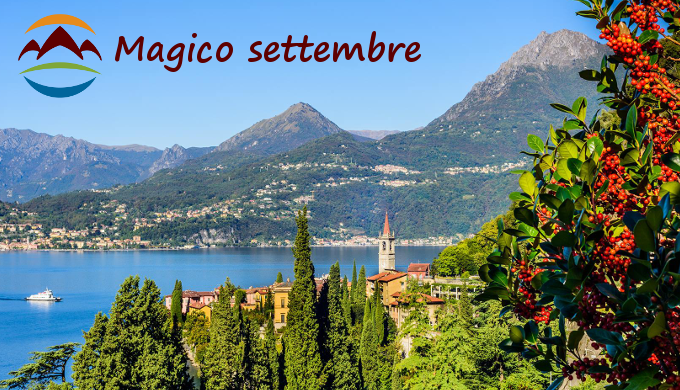
Cari amici, è arrivato settembre e come recita la famosa canzone “l’estate sta finendo”.
La nostra estate è stata ricca di presenze: moltissimi di voi hanno scelto le Montagne del Lago di Como per le vacanze. E’ stato bello conoscervi e siamo felici di avervi ospitato al lago e sui monti. Vogliamo ringraziarvi per aver condiviso le vostre esperienze, con racconti, fotografie e video.
Un magico settembre ci attende. I più fortunati di voi sono ancora in vacanza o addirittura inizieranno ora, altri si godranno weekend, brevi soggiorni o gite di giornata. Ci attende un periodo di relax, in cui le giornate si fanno più fresche e i colori lentamente si trasformano.
E’ un settembre da vivere in modo slow, dedicando il tempo giusto alle esperienze, per entrare in contatto con le tradizioni, la cultura e i sapori delle Montagne del Lago di Como. E’ il periodo ideale per le attività all’aria aperta, le camminate, le escursioni alla scoperta dei piccoli borghi, le gite in battello e la visita delle ville del Lario con i loro stupendi giardini.
I nostri ristoranti, agriturismi e rifugi sono pronti con i menù dei Weekend dei Sapori d’Autunno 2020, la rassegna gastronomica dedicata ai prodotti genuini, che ci accompagnerà fino a novembre. E’ un invito a venirci a trovare e a godere i piaceri della buona tavola.
Il nostro staff è a vostra disposizione tutto l’anno per prenotazioni, suggerimenti e consigli. Durante l’estate vi abbiamo accompagnato quotidianamente, al telefono e via email, per aiutarvi a scegliere percorsi, esperienze a prenotare camere, pasti e approfittare delle offerte commerciali dei nostri operatori. E’ stato un piacere! Continuate a contattarci e a seguirci tramite il sito www.montagnelagodicomo.it e i nostri canali social per rimanere aggiornati sulle prossime novità.
Buon settembre a tutti, dalle Montagne del Lago di Como!
Il Presidente – Stefano Gianola
Non sei iscritto alla nostra newsletter mensile? Puoi farlo direttamente dal sito! Compila il modulo che trovi in fondo alla pagina con i tuoi dati: riceverai gratuitamente i nostri eventi e le nostre proposte sulla tua email. Potrai annullare l’iscrizione quando vuoi.
Giardino del Merlo is a botanical park located in the town of Musso, in the north Lake Como area.
It was built at the foot of a castle, now in ruins, linked to the name of Gian Giacomo Medici di Marignano, called “il Meneghino”, who conquered it in 1522 and for ten years made it his headquarters.
From the garden you can enjoy a breathtaking view of Lake Como and its mountains.
Giardino del Merlo was built in the mid-1800s by Giovanni Manzi, inspired by the gardens of Liguria’s Riviera, developed on steep terrain. Thanks to the land conformation, with one side facing south and one north, Manzi created a visionary place where contrasts dominate, from the luxuriant and Mediterranean nature to the typical varieties of the Alpine environment, in a succession of walkways, bridges, caves , small gorges and waterfalls. To see alsp the beautiful church of Sant’Eufemia.
Severely damaged by time, the garden has been restored and is open to the public. Access is free.
Palazzo Gallio is an imposing ancient palace, built on a rocky promontory overlooking the town of Gravedona ed Uniti, in the area of north Lake Como.
The noble residence was built in 1586 by Tolomeo Gallio, cardinal and secretary of state to the papal throne. He, who had been entrusted with the county of the Three Parish Churches of Gravedona, Sorico and Dongo, entrusted the construction of the building to Pellegrino Tibaldi, architect of Cardinal Carlo Borromeo. The construction was completed after his death in 1607. The palace was inherited by his grandchildren, but never had a splendid life. Tradition recalls that it should have hosted that Council of the Catholic Counter-Reformation which was instead held in Trento. It was used by the French and Spaniards as a hospital, before being transferred to private hands in the early nineteenth century.
Palazzo Gallio currently belongs to Comunità Montana Alto Lario Occidentale, which has its headquarters here, and it’s a national monument.
The building has a square plan with four massive angular towers, connected together linked by narrow loggias. Two loggias open on the façade, one towards the mountain and one towards the lake: the second offers a splendid panorama of Lake Como Mountains, from here you can admire Mount Legnone and Mount Legnoncino.
Imposing the entrance and the large central hall, which reaches two floors in height, and which today is used for exhibitions, concerts and conferences. Palazzo Gallio does not present large-scale furnishings and works, presumably because the works were completed after the client’s death. It often hosts events and weddings.
Foto della galleria di Emilio Buzzella.
Fonte dei testi e alcune foto www.lombardiabeniculturali.it
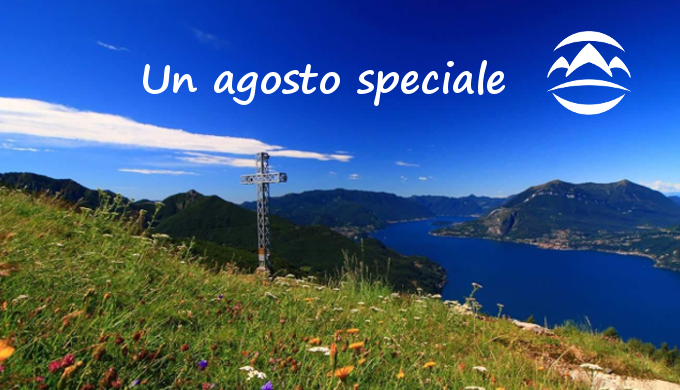
Cari amici,
agosto è sinonimo di estate e vacanze e noi speriamo di accogliere molti di voi sulle Montagne del Lago di Como.
Sarà un agosto speciale. Vivremo esperienze differenti dal solito perchè grande è il desiderio di stare all’aperto, di rilassarsi ed assaporare la libertà. Gli ampi spazi delle montagne e del lago sono l’ideale per svagarsi e divertirsi, in coppia, in famiglia e con gli amici.
I nostri operatori turistici, i Comuni e le Pro Loco si sono organizzati per offrirvi diverse proposte, soprattutto all’aperto, nel rispetto delle distanze e della sicurezza. Siamo finalmente pronti a presentarvi alcuni eventi e spettacoli, pensati per godere di nuovo e appieno della musica, della cultura e del divertimento. Un piccolo grande ritorno alla normalità, che vi regalerà emozioni speciali.
Siete in molti ad aver scelto di trascorrere un periodo di vacanza sulle Montagne del Lago di Como e altri di voi faranno escursioni e gite in giornata. Per noi siete amici e clienti speciali e il nostro desiderio è farvi vivere piacevoli momenti, coccolati dai nostri albergatori e ristoratori, sorpresi dalla calda accoglienza di rifugisti e commercianti, divertiti e soddisfatti da eventi ed esperienze.
Il nostro staff è a vostra disposizione. Siamo felici di rispondere quotidianamente alle numerose email e telefonate, con consigli e suggerimenti per rendere speciale e sicura la vostra vacanza. In tantissimi ogni giorno consultate il sito www.montagnelagodicomo.it per scegliere percorsi, esperienze e prenotare camere, pasti e approfittare delle offerte commerciali dei nostri operatori. Le numerose testimonianze e fotografie animano i nostri canali social e sono motivo di gioia e soddisfazione, grazie!
Sarà un agosto speciale, insieme a voi.
Buone vacanze
Il Presidente – Stefano Gianola
Non sei iscritto alla nostra newsletter mensile? Puoi farlo direttamente dal sito! Compila il modulo che trovi in fondo alla pagina con i tuoi dati: riceverai gratuitamente i nostri eventi e le nostre proposte sulla tua email. Potrai annullare l’iscrizione quando vuoi.
The small Romanesque temple of San Fedelino rises on the western shore of Lake Mezzola, in a secluded and silent place
According to tradition it was erected at the turn of the X-XI century, in the place where the bones of the Martyr Fedele were found, in the northernmost point of Lake Como, where the Mera river flows. The position is strategic: here Valchiavenna and the Spluga Pass and Valtellina come together, the great communication routes between Milan and Northern Europe, like Via Regina.
The church of San Fedelino can be reached with an itinerary starting from Dascio, in the municipality of Sorico. Take the path near the church and in about 10 minutes you will reach the Sasso di Dascio (277 m), a promontory with a beautiful view of Pian di Spagna. A mule track first and a path then, which continues in steps and slightly uphill among the chestnut groves, leads to a hill, the highest point of the route (496 m). A steep descent leads to the banks of River Mera. Skirting the river for a stretch, you pass two rocky slopes with the help of comfortable metal stairs. A last a flat stretch by the river leads us to the Romanesque temple of San Fedelino (208 m).
Difficulty: E ( Excursionist )
Travel time: 2 hours
San Fedele, martyr of Como Church, was killed around 300 at the time of Diocletian and Maximian’s persecutions. He was an emperor’s soldier who, having converted to Christianity, refused to make sacrificial offerings to the pagan gods before a battle. For this reason, he was sentenced to death. To escape the sentence, he fled to Como and went up the north lake with a boat, where he was joined by the assassins of and beheaded. On the place of martyrdom a chapel was built, but then it was forgotten. In 964 the relics were rediscovered, thanks to a local woman who would have seen San Fedele in a dream, indicating the place of the burial: the bishop, informed of the dream, ordered to dig in search of the relics, which were found in the indicated place and later transported to Como to be kept the basilica of Santa Eufemia, which for the occasion was named after San Fedele. The oratory was erected on the site of the discovery.
The San Fedelino Temple was built with the stone collected in the surrounding mountains. It has two entrances, one on the south side and another on the north side. Both the inside and the outside were completely covered with frescoes. The external ones disappeared, parts of the internal ones remain, largely damaged by humidity. The best preserved decoration is in the apse, on the vault is depicted Christ Pantocrator between two angels
Photo gallery by Flavio Bortolussi
The Church of St. Maria del Tiglio of Gravedona ed Uniti is located next to the parish church of St. Vincent, near the Lake Como shore.
It is part of an ancient architectural complex, consisting of the church and the bell tower that is grafted onto the facade. The facade of the church is singular: in the central position, above the entrance, is placed the bell tower, with square plan in the first stretch and octagonal plan at the top.
The the stone masonry are made with horizontal bands in Musso marble alternating with the courses made with blocks of gray stone.
The interior is characterized on the two side walls by arches to three fornics, supported by columns, , above which flows a loggia while the back wall has three terminal absidis.
Exposed stone masonry preserves portions of frescoes dating back to different eras. Among these, the most important are a Universal Judgment, Stories of St. John the Baptist and a 12th-century Wooden Crucifix.